About the Automated Workflow of Insurance Certificates

About the Automated Workflow of Insurance Certificates

Insurance Documents and Requirements

Each client that you work with may have different insurance requirements and may require different minimum amounts for various types of occurrences. A client may require any or all of these four types of insurance: 

  • General Liability 

  • Auto Insurance 

  • Umbrella Liability / Excess Liability 

  • Workers' Compensation and Employers’ Liability

Insurance Type

Description

Insurance Type

Description

General Liability

A client may require an Occurrence or Claims-made coverage and specify the required amount for each of the following:

  • Each occurrence

  • Damage to rented premises (EA occurrence)

  • Medical expense [Med exp] (any one person)

  • Personal and advertising injury (Per adv injury)

  • General aggregate

  • Products - completed operations aggregate (Products - comp/op agg)

A client may require the General Aggregate Limit to apply either Per Project, Policy, or Location. A client may also require Additional Insured and/or Waiver of Subrogation endorsements.

Auto Insurance

A client may require insurance for any one of the following types of automobiles: any auto, owned autos only, hired autos only, scheduled autos, or non-owned autos only, and specify required amounts for the following:

  • Each occurrence

  • Damage to rented premises (EA occurrence)

  • Medical expense [Med exp] (any one person)

Umbrella Liability/Excess Liability

The coverage required could be either Umbrella or Excess Liability, and could be on a Per Occurrence or Claims-Made basis. Specific amounts will be specified for Each Occurrence and Aggregate.

Workers' Compensation and Employers’ Liability

The coverage required could be either Per Statute or Other type, with specific amounts mentioned for

  • EL Each Accident

  • EL Disease - each employee

  • EL Disease - policy limit

The description required by the client appears in the Description of Operations/Locations/Vehicles field and the required address appears in the Certificate Holder field.


OCR and Auto-Review Results

Manually filling out the certificates of insurance (COI) content and changing it every year for each client is a time-consuming process. Now, uploading insurance information and checking if it meets clients’ requirements have become faster.

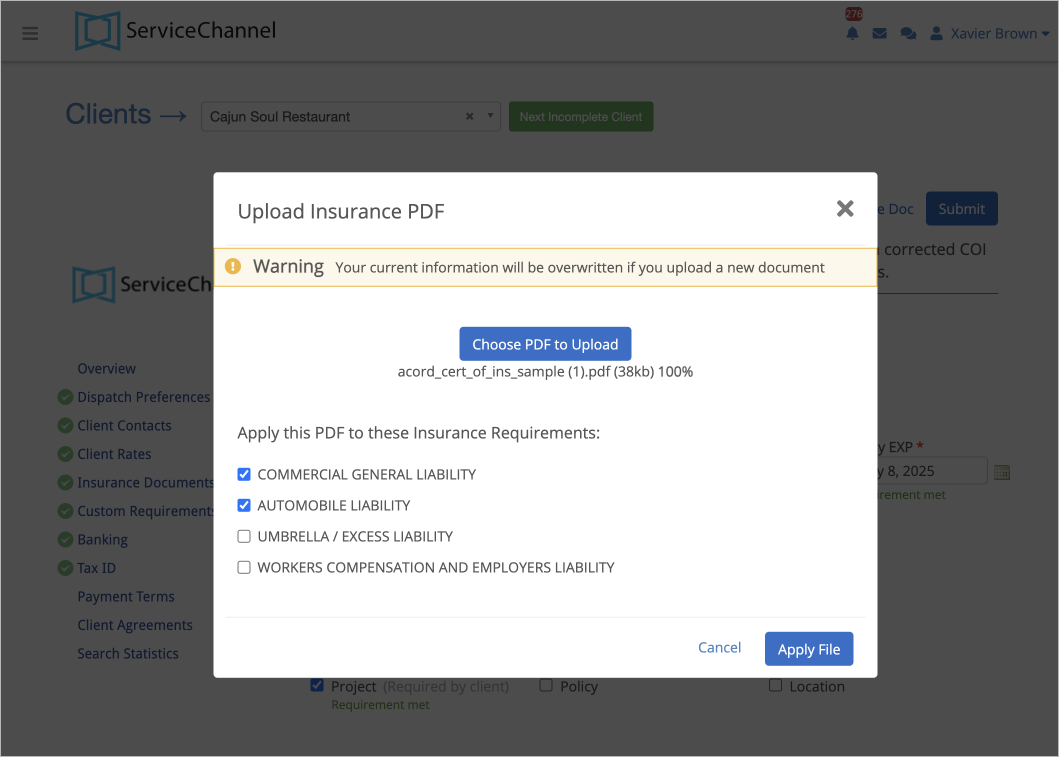
We use the Optical Character Recognition (OCR) technology to scan an Acord 25 insurance certificate and fill in its content to ServiceChannel. Then, ServiceChannel validates the information and shows Auto-Review Results on your compliance with the client’s requirements.

The OCR technology can only fill out the information from an Acord 25 insurance document. If the uploaded document is not the Acord 25 document, you will have to manually enter its info. The Auto-Review Results will show you compliance in manual and auto-fill out cases.

Your client should have the feature turned on for you to use the OCR and Auto-Review Results.

Contact your ServiceChannel representative to learn more.

While ServiceChannel strives for accuracy, we recommend reviewing the information entered before submission. ServiceChannel cannot be held responsible for any inaccuracies.
With OCR and Auto-Review Results, your workflow of insurance upload consists of 7 steps:
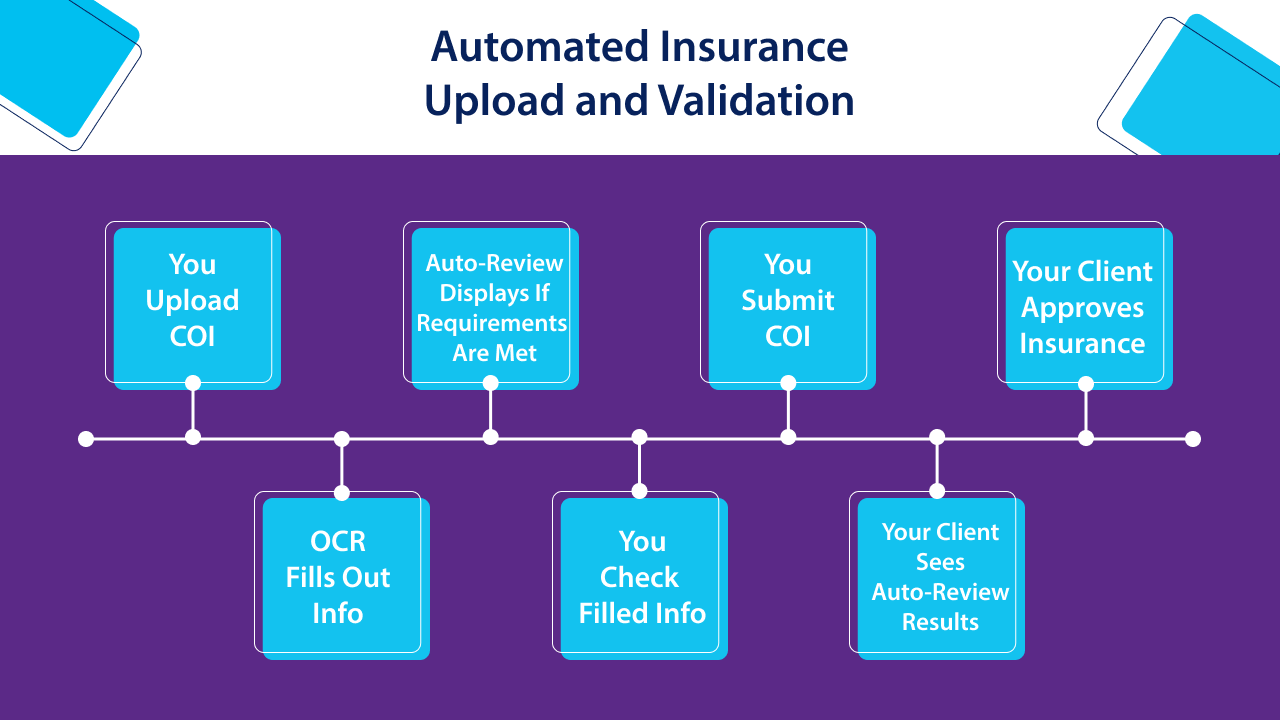
  1. You upload an Acord 25 insurance certificate.

  2. Our Optical Character Recognition (OCR) technology scans it and fills out the information in the right fields. If you uploaded the document that is not the Acord 25 form, you should manually enter its content.

  3. Auto-Review Results show if the information entered meets a client’s requirements.

  4. You check the correctness of the information entered.

  5. You submit updated COI(s).

  6. The Auto-Review Results show your clients how many requirements are met, allowing them to approve or reject insurance certificates faster.

  7. Your client makes a decision on insurance approval.

How to Access the Insurance Documents Page


  1. At the top of the page, click the Clients tab.
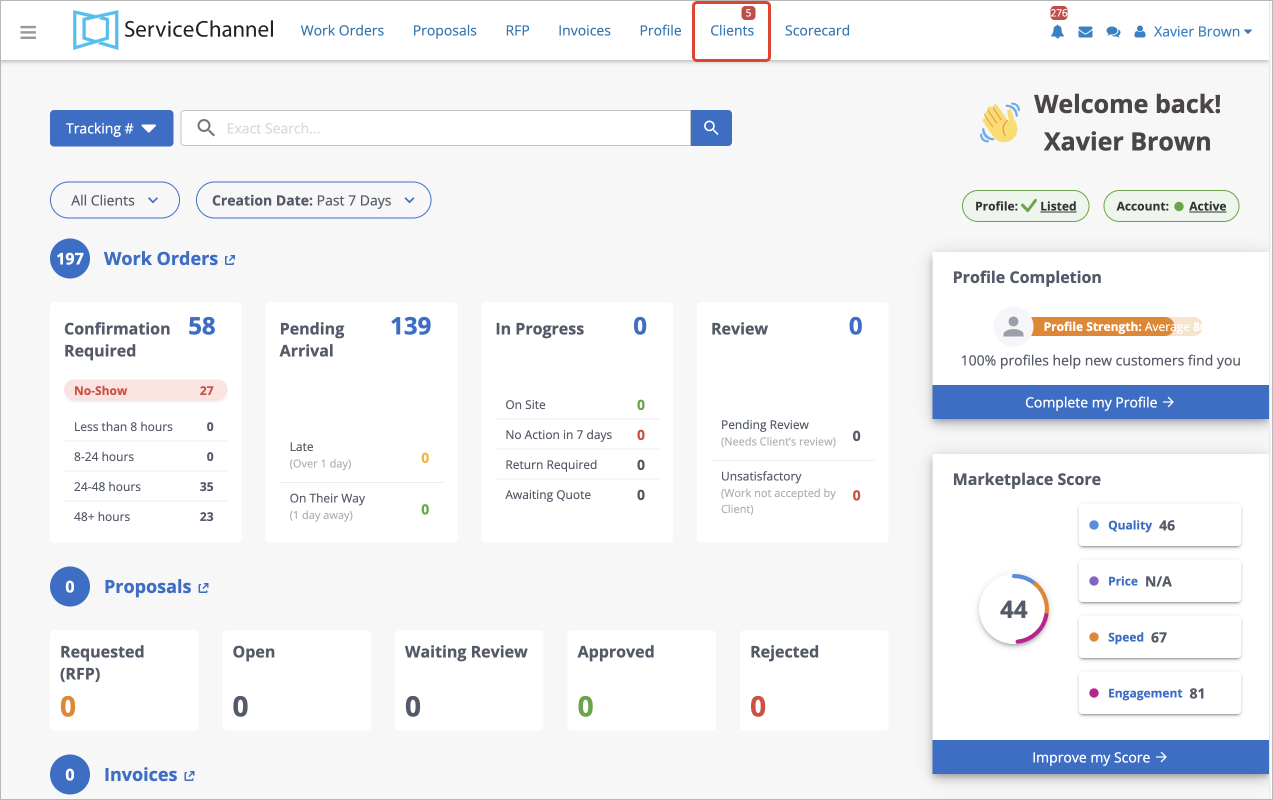
image-20260618-110619.png
  1. Click on the client's name from the list or click Continue next to the needed client.
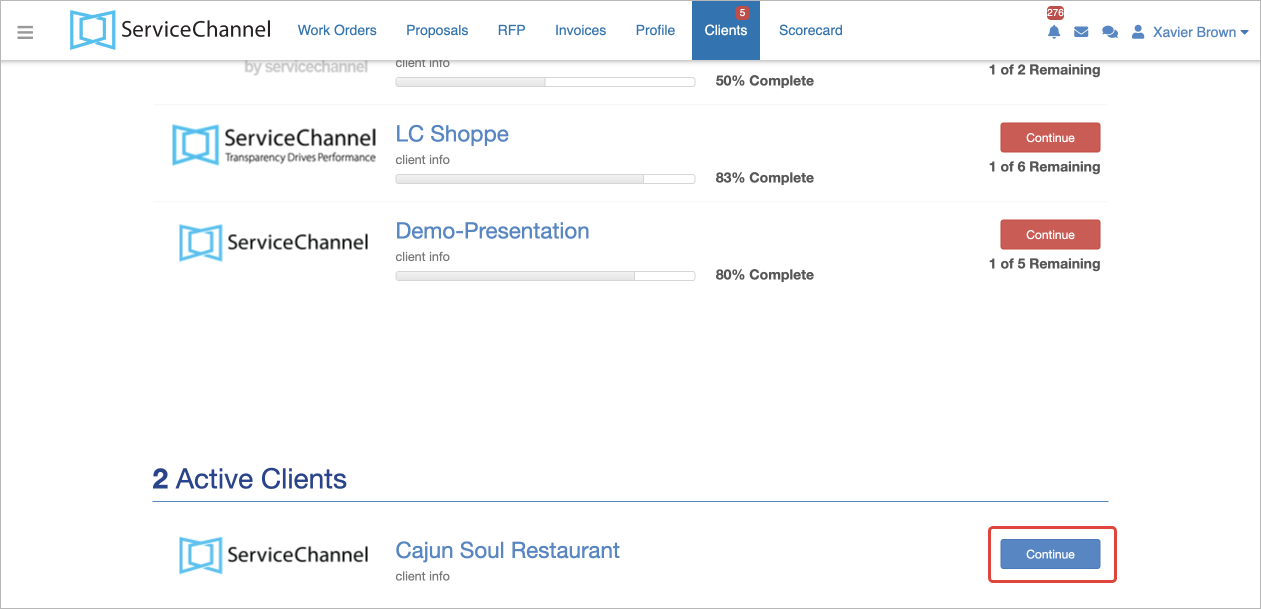
image-20260618-110645.png
  1. On the left menu, click Insurance Documents.
    The page with insurance types appears.
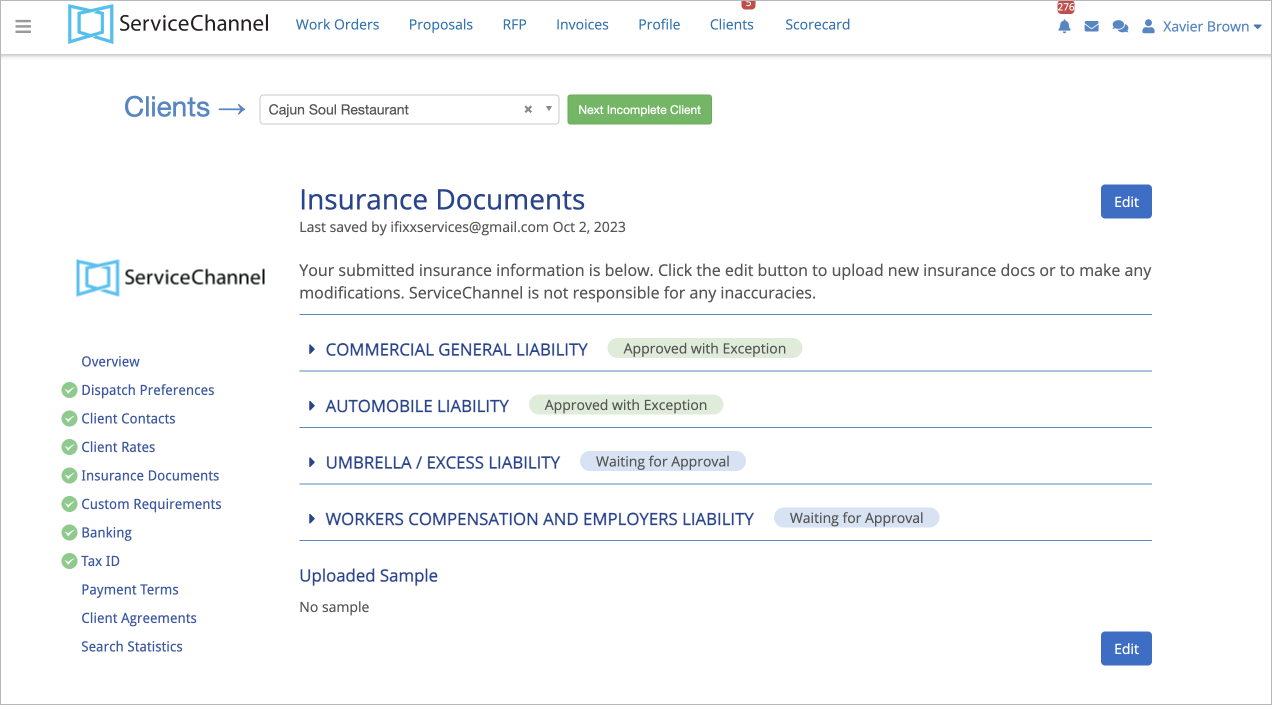
image-20260618-110712.png


Reviewing the Insurance Documents Page

The Insurance Documents page contains 3 sections:

  • Client and requirements

  • Insurance Types

  • The Action buttons

Hover over the purple buttons in the picture to view more information about each section.

HTML Macro

Next to each insurance type, you can see statuses that show at what stage of insurance workflow your insurance types are. 
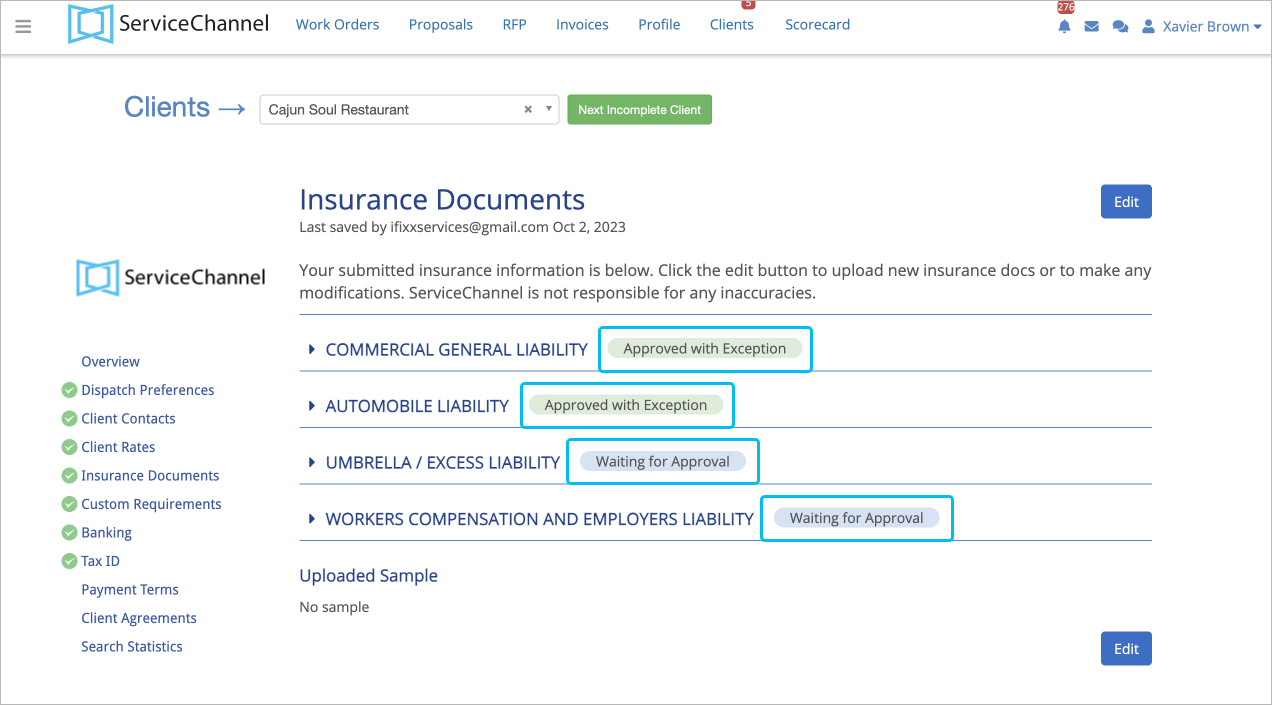
  • Modified. The information of the insurance type has been changed but the insurance is not submitted to the client yet.

  • Missing. This status appears when the insurance type has no insurance information and uploaded documents.

  • Waiting for Approval. The insurance certification has been sent to a client, awaiting their decision. 

  • Approved. A client has approved an insurance document.

  • Approved with Exception. You see this status if a client approves the insurance document, but it is not fully compliant with their requirements.

  • Approved (Future Effective Date). If your insurance document goes into effect in the future and is approved by your client, you see this status.

  • Rejected. Your client rejected an insurance document. You will get an e-mail showing what requirements have not been met or the reason for rejection.

  • Expired. If your insurance document has reached the expiration date, you see the Expired status next to the insurance type. 

  • Approaching Expiration. You will see this warning when your insurance document is close to expiration. 

Each insurance type can be expanded by clicking the Arrow icon. The information inside each of the sections varies depending on the insurance type. 
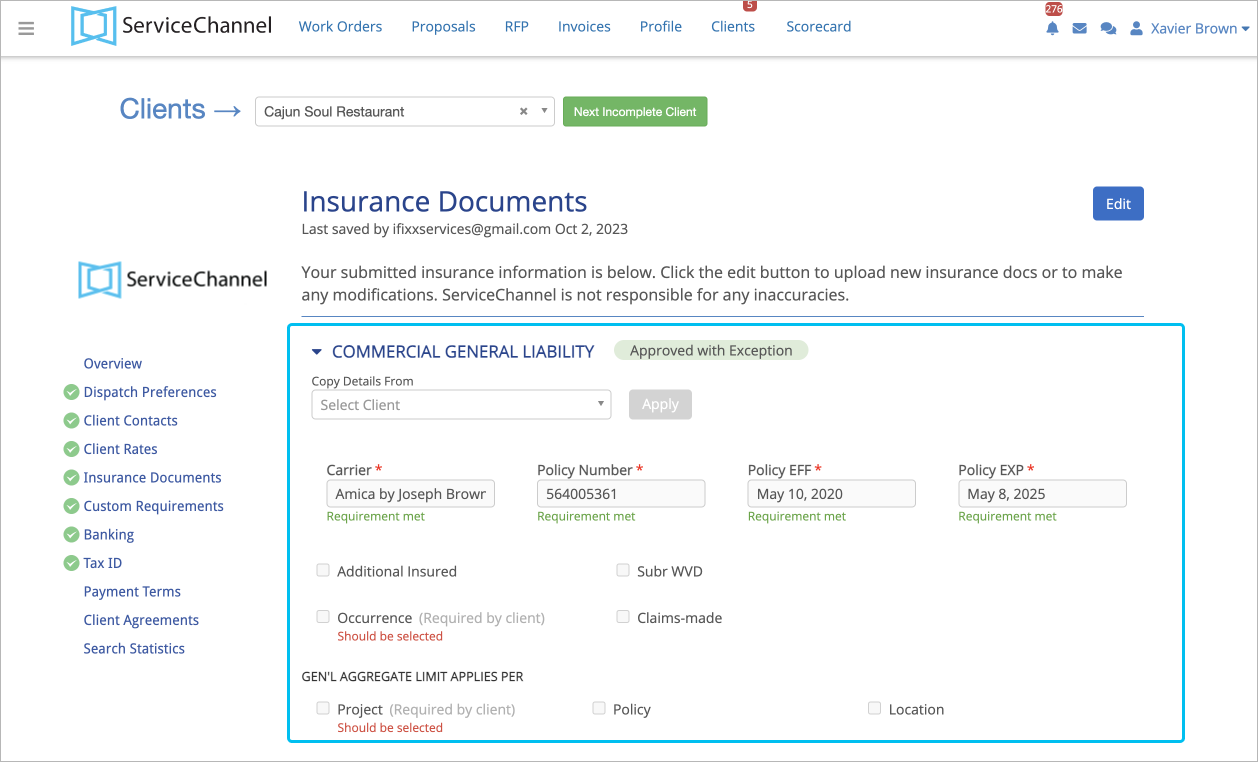
When you upload an Acord 25 insurance certificate, the Auto-Review Results show if the entered information complies with your client's requirements for insurance documents. 

In each section, you will see markers helping to complete insurance information in line with your clients’ requirements and foresee whether you need to make changes. 

Green Text

Shows that the entered value meets client’s requirements.

Red Text

Indicates missing values or value snot meeting client’s requirements. 

Grey Text

Indicates that the value is not detected or missing in the document, and you need to manually enter it.

To upload an insurance certificate, read Uploading Insurance Documents with OCR and Validation.

Html Macro